

Latin America is not one market
Different regulations, logistics, and business cultures make regional strategies ineffective if not localized.

Latin America is often approached as a single region. In practice, it behaves as a collection of very different markets.
Regulations, import duties, logistics, currencies, and business cultures vary significantly from country to country.
A strategy that works in Mexico may not work in Colombia. What succeeds in Brazil may not translate to Central America.
This fragmentation makes “regional” approaches inefficient if they are not adapted locally.
Successful companies in LATAM are those that understand this early and build their presence step by step, country by country.
Education is the most scalable AV vertical
With thousands of institutions and growing demand for video-based learning, education offers repeatable business opportunities.

Among all verticals in Latin America, education stands out as the most structured and scalable opportunity.
The region has thousands of higher education institutions and millions of students, with a growing need for video-based learning and content distribution.
Unlike other sectors, education allows for repeatable models: lecture capture, hybrid classrooms, content management, and student engagement platforms.
Institutions are actively looking for solutions — but they require cost-effective, reliable, and easy-to-deploy systems.
For manufacturers willing to adapt their approach, education represents a long-term, sustainable growth path.
Why cloud adoption is still limited in LATAM
Infrastructure, cost structures, and operational risks still favor on-premise solutions in most markets.

Cloud production is often presented as the future of video workflows.
However, in Latin America, adoption remains limited.
This is not due to lack of interest, but to structural factors:
connectivity costs, infrastructure reliability, and operational risk.
In many cases, producing in the cloud from cities like São Paulo can be more expensive than from the United States.
As a result, on-premise solutions continue to dominate — especially in broadcast and professional production environments.
Any strategy for the region must take this into account.
The myth of regional distribution
Many manufacturers expect a single distributor to cover LATAM — reality proves otherwise.
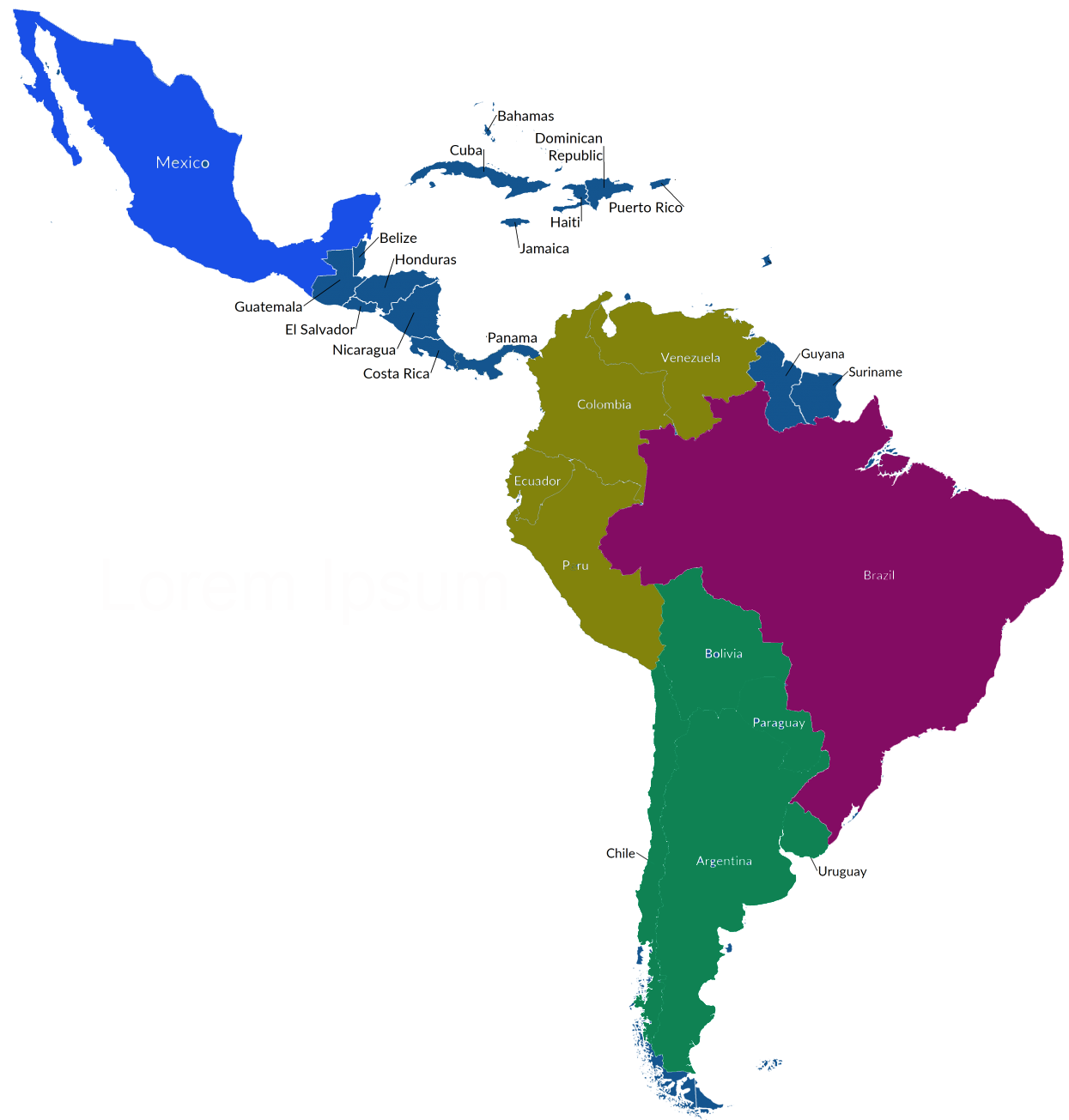
A common assumption is that a single distributor can effectively cover all of Latin America.
In reality, this rarely works.
The region is too fragmented — geographically, economically, and operationally — for one partner to manage it efficiently.
Successful channel strategies are built through a network of specialized partners, each with strong local presence and relationships.
Building this ecosystem takes time, but it is essential for sustainable growth.
Relationships still drive the market
Despite the growth of digital communication, Latin America remains a relationship-driven market.
Trust, credibility, and personal connections play a central role in decision-making.
Many opportunities are not visible through formal channels — they emerge through conversations, visits, and long-term engagement.
Companies that rely only on remote strategies often struggle to gain traction.
Being present — directly or through trusted partners — continues to be a key success factor.

Flexibility defines successful solutions
Markets in Latin America often operate under constraints: budget limitations, infrastructure challenges, and complex procurement processes.

Solutions that are rigid or overly complex tend to fail.
What works are flexible systems — adaptable, scalable, and easy to deploy in different environments.
This is particularly true in sectors like education, corporate, and government.
Technology must adjust to the market, not the other way around.